When help gets a face: why personal fundraisers are changing the way people give
Some campaigns take months to build. They have a well-thought-out strategy, a clear goal and carefully prepared communication. And then there are the moments that come about almost unnoticed. From a single idea, from a personal decision.
Some campaigns take months to build. They have a well-thought-out strategy, a clear goal and carefully prepared communication.
And then there are the moments that come about almost unnoticed. From a single idea, from a personal decision.
“I don't want birthday presents this year. Let's help someone instead.”
All it takes is a simple impulse that can set dozens, sometimes hundreds of people in motion. People donate, share, respond, and gradually more join in. Not because a perfectly crafted campaign won them over, but because they see a real person behind the initiative – their story, their motive and a reason that makes sense.
What really decides a donation
A donation isn't just a sum that lands in our account. Behind it is a person with their own story, experience or inner motivation. And it is precisely these personal dimensions that are playing an increasingly important role today.
Trust in organizations remains key; without it, no help would ever happen. At the same time, it turns out that the decisive impulse often comes at the moment when help is connected to a specific relationship.
When we are approached by someone we know, someone we trust and whose reasons we understand.
A recommendation that is not anonymous but personal. Trust is thus not only passed between an organization and a donor. It comes alive most strongly in the relationships between people themselves.
How a single impulse becomes a shared cause
This is exactly the principle behind personal fundraisers, also known as peer-to-peer fundraising.
In practice, it's a very natural moment: a person decides to support a good cause and shares it with the people around them. With family. With friends. With colleagues. Informally, personally, without grand words.
And that is exactly why it works.
One decision becomes a shared activity; individual donations become a shared story. Personal fundraisers are therefore not just a way to raise more funds. Above all, they are a way to involve more people in helping and to give them the opportunity to be part of it.
A trend that is growing here too
The importance of this approach has been growing for a long time — worldwide and in the Czech Republic.
In the United States, the 30 largest peer-to-peer programs raised more than $1.17 billion in 2025 and engaged over 2.6 million people.
Organizations that work systematically with their community show more stable growth and deeper donor engagement.
We are seeing a similar development in the Czech Republic.
In 2025, a total of 593 personal fundraisers were started on Darujme.cz, raising almost CZK 52 million between them. That represents a year-on-year increase of 92%.
But these figures are not just nice results.
They are hundreds of stories of people who decided to involve those around them and give help a personal dimension.
Why even the simplest stories work
You might picture a personal fundraiser as a big athletic feat or a public event.
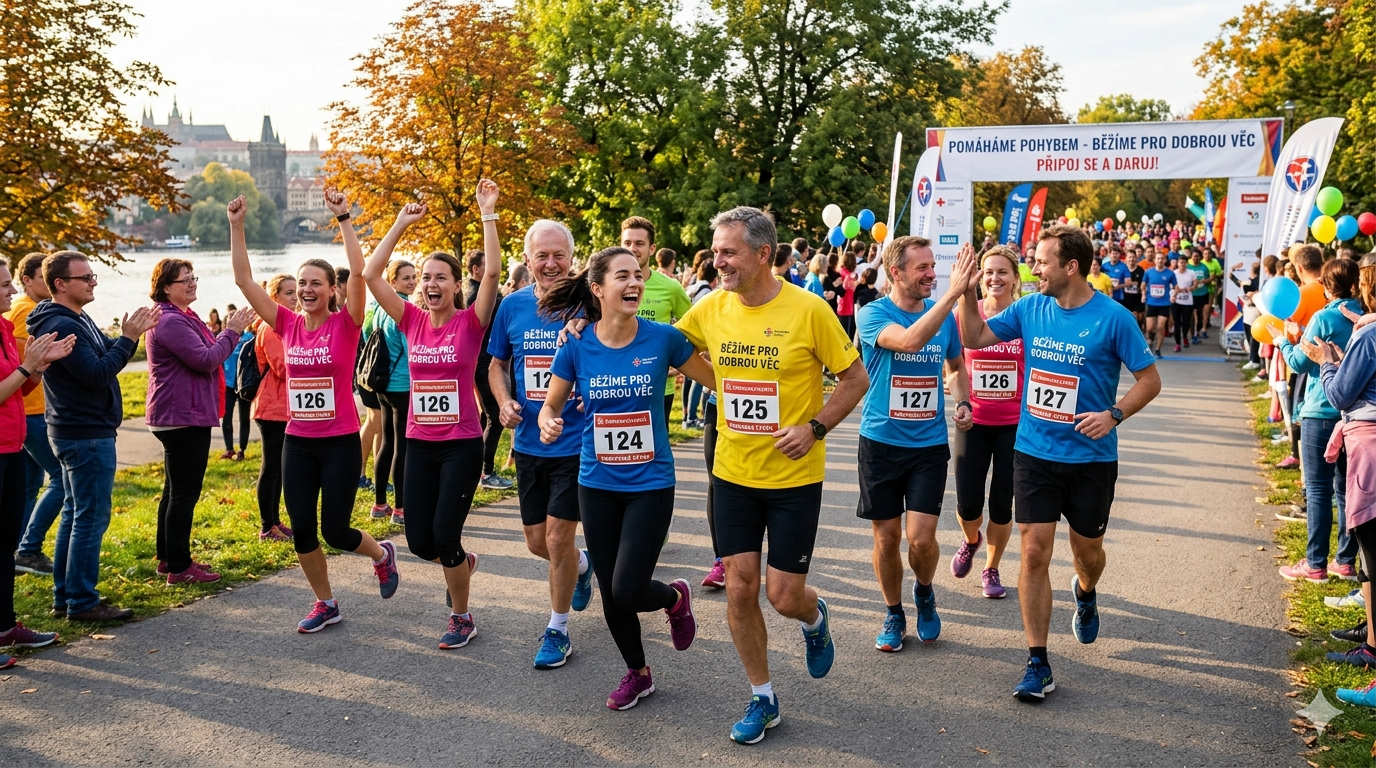
Yes, those have their place too. Someone runs dozens of kilometers, someone else climbs a high mountain again and again.
But much quieter moments can be just as powerful. Birthdays. Anniversaries. Personal milestones. Memorial campaigns.
It is in these moments that space opens up for authentic sharing that comes from one's own life. And authenticity is what people respond to most keenly and what gives them a reason to join in. It's not about perfection, but about meaning.
Give the people around you the opportunity to help
If you already support an organization today, you may have asked yourself whether there is a way to help just a little bit more.
A personal fundraiser can be the answer. Not because you yourself give a little more, but because you also open up space for others. Suddenly it's no longer about a single donation but about a shared experience that the people around you can step into. And often something emerges that surprises even the biggest skeptics... people want to help and are willing to, they just need the opportunity and a reason.
When donors become a community
For organizations, personal fundraisers are more than just another fundraising tool. They are a natural way of working with the community that forms around the organization, and a chance to give that community a bigger role.
Every donor has their own relationships, their own environment, their own circle of people, their own story. And the moment they are given space to get more actively involved, this network naturally begins to expand and becomes a bridge to more people.
What an organization would spend months building can thus unfold naturally, through trust that already exists. It's not just about new donors; it's about deeper relationships, greater trust and a sense of belonging.
It is precisely where people don't feel like mere “supporters” but like part of a community that relationships with the potential to grow are formed, and that is how long-term stability is built.
Small impulse, big change
It might seem that involving donors in campaigns is complicated or demanding.
In reality, it often takes much less.
Gentle encouragement.
A reminder that such an option exists.
Sharing one story that inspires others.
It is these small impulses that tend to turn a passive donor into an active ambassador, and they show that working with a community doesn't have to be complicated. All it takes is being attentive to the people who are already with you.
A donation with a face
Fundraising today isn't changing only thanks to new tools. Above all, it is changing in how people think about helping. They don't want to be just donors. They want to be part of it. To share. To get involved. To have an impact.
Personal fundraisers make that possible — in a natural, human way.
And maybe that's exactly why they work so well. Because the moment help gets a real face, it has a much better chance of spreading further.