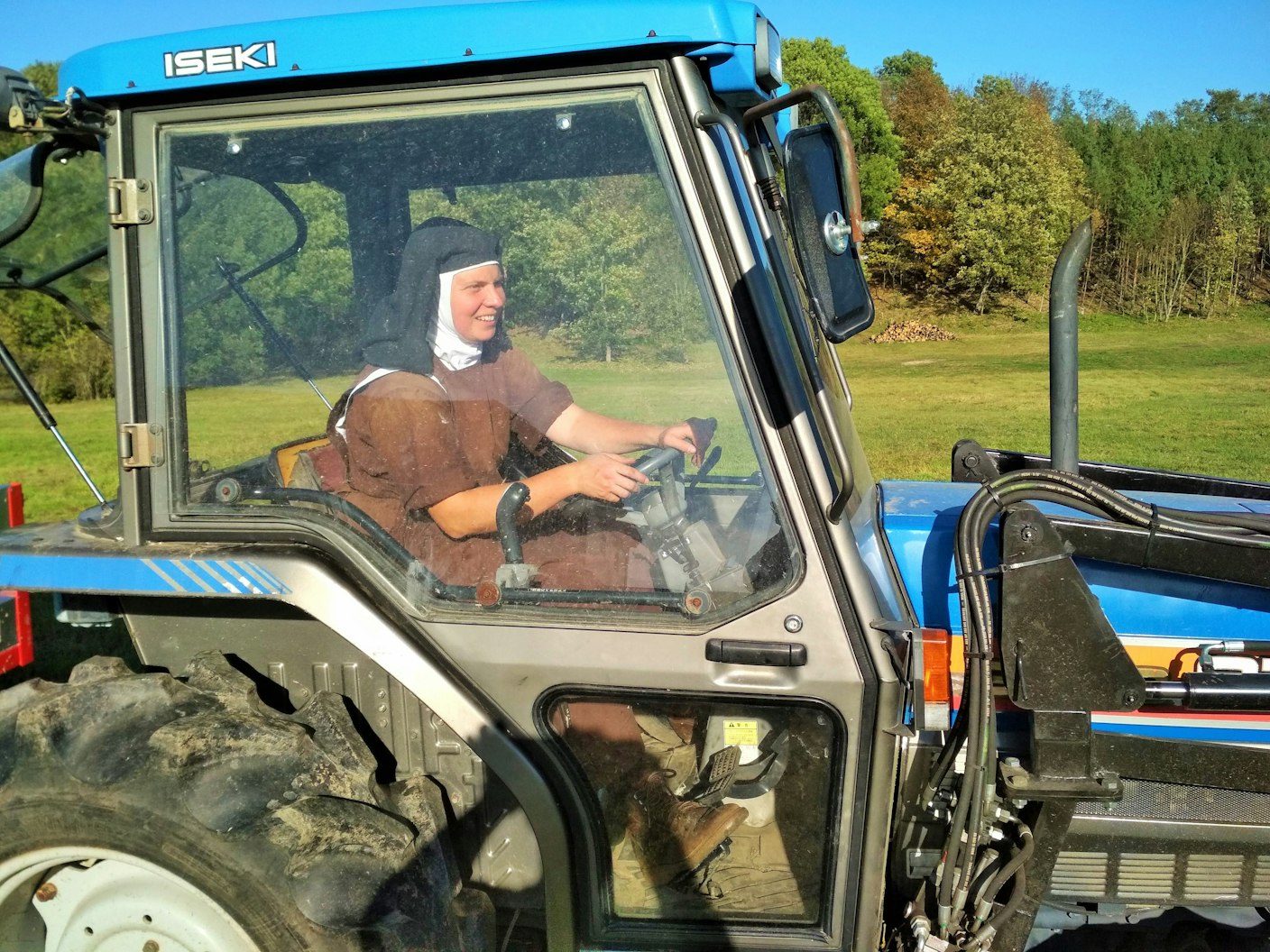
Nuns on tractors are turning a dump in Drasty into an oasis. A fundraiser on Darujme.cz is helping them too
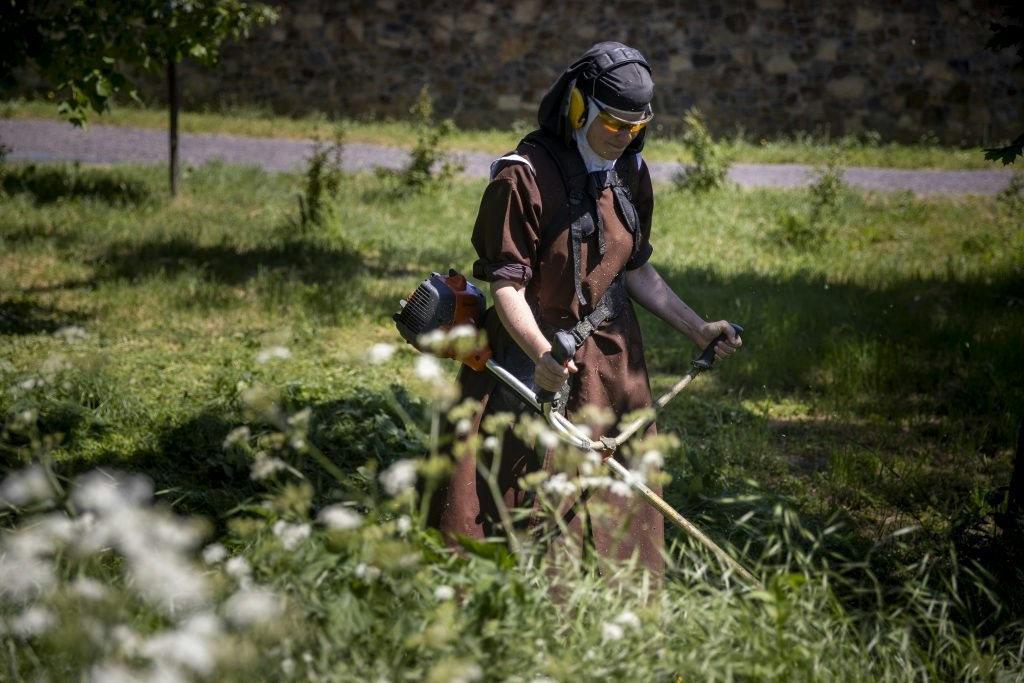
When someone says "convent", few people picture nuns in overalls behind the wheel of a tractor. And yet that is exactly what the Discalced Carmelite nuns of Drasty are like. In the middle of the Central Bohemian countryside, on the site of a former public dump, they are today building a spiritual and cultural center step by step. Not by a miracle, but with everyday courage, faith and a shovel in hand. What does life behind the convent wall look like? Why did they decide to restore a neglected farmstead? And how does a fundraiser on Darujme.cz help them with it? We talked about all of this with Sister Marie.
Who are the Discalced Carmelites, and why are they called "discalced", or barefoot? How did they end up in Drasty at all, and what do they consider a real miracle? Read our interview with Sister Marie
Not everyone knows your community. Who are the Discalced Carmelites?
We are a religious order that was founded in the 16th century in Spain, when Saint Teresa of Ávila reformed the Carmelite order. That order had even deeper roots, reaching back to the 12th century, when hermits began to gather on Mount Carmel in the Holy Land, mostly former crusaders or merchants who wanted to change their way of life. They asked the then Patriarch of Jerusalem to write down a rule of life for them, the so-called Rule. In the 16th century the order then spread to Europe. The Church was going through a number of reforms at the time. Several orders that were trying to return to their origins took on the epithet "discalced", meaning barefoot. That is how the Discalced Franciscans, the Discalced Carmelite friars and the Discalced Carmelite nuns came into being.
How do Discalced Carmelite nuns live?
Teresa of Ávila already steered us, the sisters, towards forming small communities. She wished for us to have close relationships and to form a kind of family. Typical of the Discalced Carmelites is what we call mental prayer, when we spend time together in the chapel in silence and each of us prays only in her heart. Intercession for others is the centerpiece of our life. The second pillar is what we call recreation, when we come together as a community and chat freely while doing handiwork. Teresa was a very wise and down-to-earth woman who imprinted balance on our way of life.
How large is the community of Discalced Carmelites in Drasty, and what does your daily rhythm look like here?
There are ten of us. And since 2018, when we bought the old farmstead in Drasty, we have been living in an exceptional rhythm. Work takes up more of our time than it used to. The standard of our life, though, is that we have five hours of prayer and five hours of work every day. On top of that we have two hours of recreation, after lunch and after dinner, when we come together as a community. It is spread fairly evenly over the day. A block of prayer in the morning, followed by a block of work; under normal conditions there is recreation after lunch. Then another block of work in the afternoon, and prayer and recreation in the evening.
How did you end up in Drasty? Where did you come from?
We were based on Hradčany Square, in the very heart of Prague. We had only one guest room there and a garden of maybe 12 by 12 meters, on concrete, essentially in the middle of the built-up area. On top of that, the noise from the surrounding lanes and restaurants kept growing. It was not suitable for our way of life. We felt we should look for a place that would give more life, both to us and to other people. The search for a suitable plot took a very long time, thirteen years. Then Drasty came up, which the Vyšehrad Chapter had regained in the second wave of restitutions.
What was your first encounter with Drasty like?
When two of our sisters first came to see it in 2016, they did not like it at all. It was essentially a public dump. The sisters came back and said: "Well, probably not."
What changed?
We could not find anything else. So we went to look at it again, and a conviction began to take root in us that we should give it a try. The plot had interesting dynamics: a slope, a meadow, a forest. It was close to Prague, it was quiet, and we were also drawn by the combination of old and new buildings. Later we also discovered a deeper meaning in restoring something so devastated. We decided to do as much of the work as possible with volunteers, to invite other people and, through that, to make contact with the locals as well. It turned out to be a tremendous blessing. It is a demanding path, but a beautiful one. And partly thanks to that, we have come to love Drasty very much.
Was anyone an inspiration to you on your journey? I am thinking, for instance, of the well-known example of the restored church and pilgrimage site in Neratov.
We had of course heard about Neratov, but we were more in contact with other religious communities that have a lifestyle similar to ours. We drew inspiration, for example, from the Trappist brothers who built the monastery in Nový Dvůr. One of them came to see us in Drasty and encouraged us that we could manage it. Another order advised us to renovate the guest house first, move in there provisionally and so be present for as much of the work as possible, both on the construction of the convent and on the landscaping of the grounds. That was excellent advice.
Did you know the history of the farmstead in Drasty?
Yes, it was very beautiful that we came into contact with the history of this place. We knew that the Vyšehrad Chapter had bought the farmstead sometime at the beginning of the 20th century. Before the war, a Jewish family, the Saxls, managed it for them. The descendants of that family, who today live all over the world – in Australia, Switzerland and Argentina – contacted us. They found us on the internet and could not believe their eyes. They were thrilled and moved that the place would come back to life. Thanks to them we also have some pre-war photos of Drasty, when the adjoining park was beautifully kept, the buildings well cared for and the farm flourishing. Horse-drawn carts used to set out from here, carrying the harvested crops to Vyšehrad.
But then the Second World War came…
Yes. Part of the managing family fled, part was deported to Terezín. After the war Drasty was nationalized and the farmstead belonged to the collective farm (JZD). The 'final nail in the coffin' was then the twenty years after the Velvet Revolution, when everyone was waiting for the restitutions and no one was interested in looking after the site anymore. The Vyšehrad Chapter got it back from the collective farm in a terrible state. After the revolution, people began illegally dumping rubble here. Whoever needed to throw something away threw it here.
Your order bought Drasty in 2018. What did it look like here seven years ago?
It was truly a ruin full of rubbish. In the garden you could not even tell what exactly the plot consisted of, because it was hopelessly overgrown with self-seeded trees and weeds. When we began clearing the garden, we came across banks of rubble mixed with rubbish, illegal landfill, really nothing inviting.
How did the locals look at you?
With distrust. The bus driver was surprised when we wanted to get off in Drasty. The locals did not really know what to expect either, how we would behave, or what we were at all.
What helped you overcome this barrier with the locals?
What helped most was when our neighbors saw us doing even quite heavy work in any weather: in the summer heat, in the snow, whenever. When they got talking with us, they saw that we were perfectly normal, that we were not antisocial "nuns" living with our heads in the clouds, but that we stood with both feet firmly on the ground. That began to break the ice. And it also helped a lot when the neighbors saw that Drasty was really being improved. Suddenly they had somewhere to go for a walk. They no longer had to be ashamed of where they lived.
What was it like when you started organizing the first volunteer work days in Drasty?
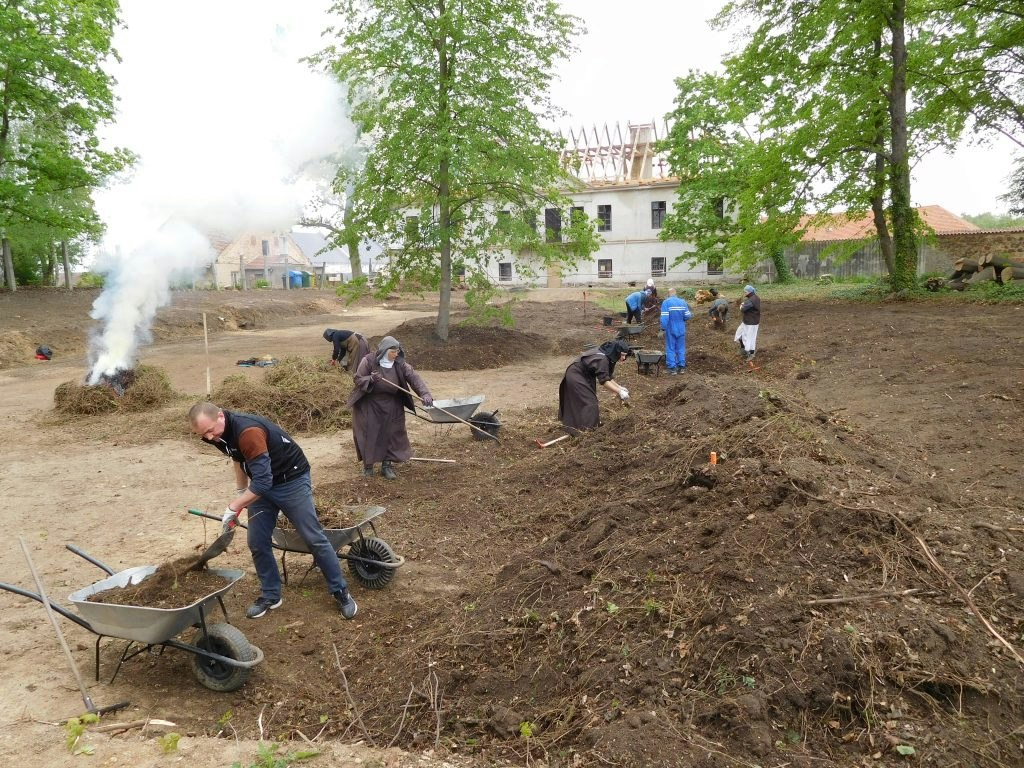
From the beginning we knew we wanted to do as much of the work as possible ourselves. First we needed to try it out on our own, to find out what the work would involve, what tools we would need and so on. Before we announced the work days to the public, we worked in Drasty by ourselves, with just a few of our closest friends. Only afterwards did we decide to invite the public, partly to help and partly to build relationships and break the ice, to let people know about us and about the whole project.
How did you communicate those calls for volunteers?
Through our website, through e-mails. We managed to establish a very nice contact with the local parish in Odolena Voda, so the locals started helping us spread the word too. It snowballed, and a truly broad range of volunteers started coming to us.
Your shared lunches were a big hit…
Yes, as part of the work days we also wanted to offer the volunteers something pleasant. That tradition continues to this day: every Saturday from nine there are work days here, at 12 there is a short prayer and then we eat together. When the weather allows, we eat outside, in the gazebo or on the benches, for instance. We make a simple volunteers' lunch; sometimes we roast sausages, sometimes we just have bread with cheese and ham, we provide drinks and we chat.
In 2020 you moved into Drasty. How big a step was that?
First we moved into the guest house, which was not adapted to our way of life. We could not fit in there with our workshops, for example, which need storage for materials, so we had to stop a large part of our production altogether. But the fact that we were here was so big that we got over that quite well.
At what point did you decide to apply for a grant from the Via Foundation?
I had heard about the Via Foundation before. I felt we were on the same wavelength. But when we were in the middle of large construction investments, it did not fit together yet. I hoped that one day it would come to that, that our intentions would come together. And that moment has come right now. I was also encouraged by Jan Řežáb, the founder of JRD, and his assistant Petra Marková, coordinator of the JRD Fund for Sustainable Living at the Via Foundation.
What did it mean to you to actually receive the grant? How did it feel?
It was a great joy. In fundraising you apply in lots of places and only a small percentage of it works out. What is more, thanks to it I came into contact with lots of wonderful people whom we understand and who can help us move forward again.
What will the grant make it possible to change in Drasty?
Thanks to the grant, Drasty will be able to turn green again. Very demanding excavator work on the terrain awaits us, and the grant will help us a lot with that. And then another large part of it is earmarked for planting shrubs and trees.
The photos of nuns on a tractor or a loader caused quite a stir. How did you learn to work with such heavy machinery?
We have several sisters who are very handy with it, one in particular. And fortunately there is always some man around here who shows us how to work with the machines. And then there are plenty of opportunities to get proper practice at work. Without heavy machinery we could not have managed the restoration of the grounds in Drasty.
What has given you the greatest joy so far in connection with the grant?
Apart from the grant itself, definitely the contact with the people from the foundation. We felt support, a mutual joy that we can work on this together and create something beautiful. And of course the reactions of donors, too, for whom supporting us makes sense. It is great when you find out that you are not alone in this.
Has anything happened in Drasty that you did not expect at all? Something you might even call a miracle?
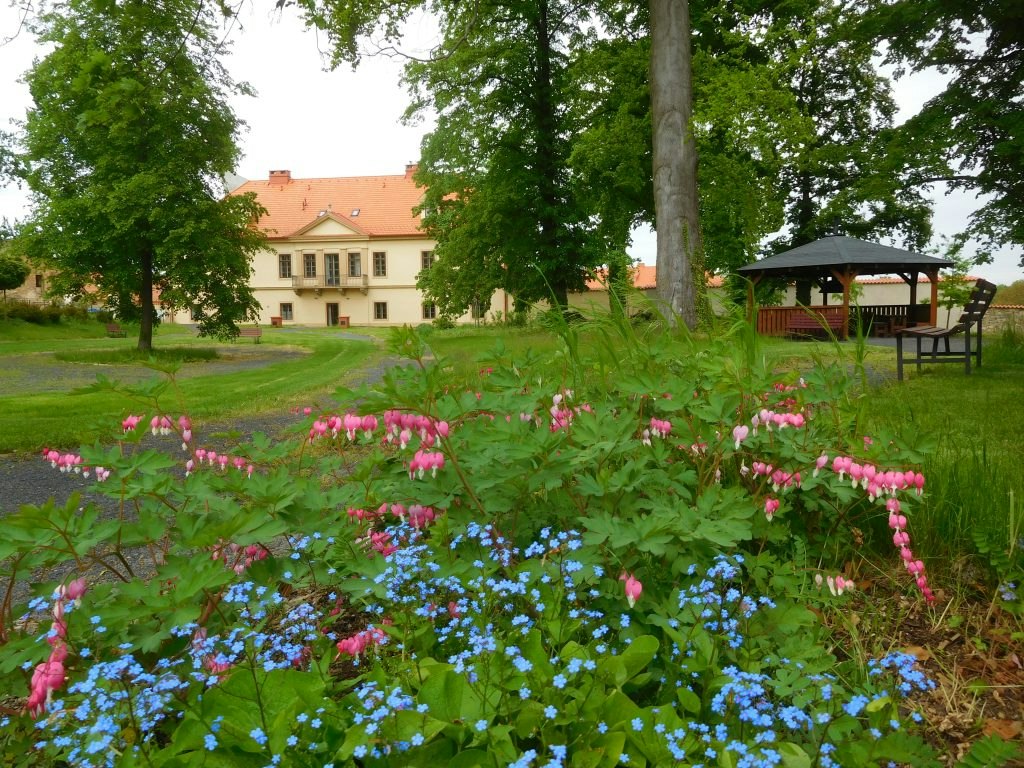
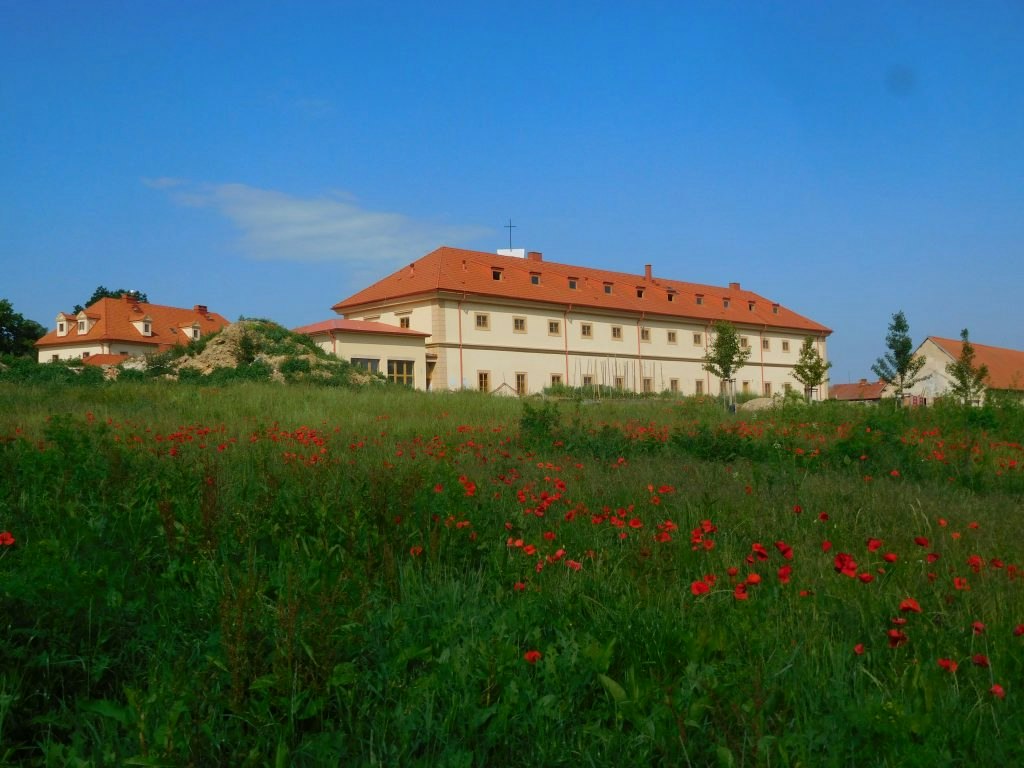
We would call this whole project a miracle. We have got used to not taking the good things around us for granted. Because it really is not a given that someone lends you a helping hand, that a good idea comes up, or that when we do not know what to do about something, a person turns up who has the expertise and helps us. All of these are little miracles. And a series of everyday miracles then makes up the big miracle that has us sitting here together on a bench today, looking at the new convent church, the restored buildings, the newly planted avenue of trees, the pond, the mown meadow.
Do you think the joint work in Drasty has also improved relations with the locals?
They have improved very much. At first the locals did not know what to expect from us, and now they have accepted us. They like to go for a walk in the park or have a look in the courtyard to see how the work is progressing. We had a barbecue in the gazebo where the newcomers who live on our grounds got to know the old-timers. The place is coming to life. And its whole atmosphere has changed.
What is your dream?
Our dream is for as many people as possible to be able to experience joy and peace here in Drasty and draw new life from it. We believe it springs from deep within each of us.
Fundraise like the Discalced Carmelites. What is behind the success of the fundraiser to turn the bare plain by the convent in Drasty into a green oasis full of life? Sister Marie answers for Darujme.cz
Your fundraiser on Darujme.cz reached more than 95 donors, and you have already raised more than CZK 160,000 in it. How did you spread the campaign so that it reached enough people?
Because we have been working on fundraising more intensively since 2021, we have already managed to build a donor base. People know about us, and we have their e-mail addresses. Then all it takes is to send out an e-mail with a link to the fundraiser. We are lucky to have a group of people around us who almost always contribute. Those people know what we do and why we do it, and their support is huge.
Was this your first fundraiser, or did you already have some earlier experience and know how to go about it?
We already had some earlier experience. We ran fundraisers on the Donio portal and on its Christian alternative Donace.cz, where our target amounts were larger, over CZK 1 million. They concerned major construction work, so far more activity was needed on our part. We went to the media and told the public about our story.
Was there anything about running the fundraiser that caught you off guard or surprised you, whether pleasantly or unpleasantly?
I was pleasantly surprised that on Darujme.cz it went even more easily than I had expected. I wondered whether people might have grown tired of us after all these years, whether supporting us would still make sense to them. It was very beautiful to see that it still does.
Do you plan to keep working with your donors, for example in another campaign?
We will see. As for campaigns, we are not sure whether we will go into any more, because our usual way of life is, after all, more hidden. We would rather withdraw from the media. That was what was pleasant about the fundraiser on Darujme.cz: we did not have to go to the media.
But we do try to work with donors through direct contact. For example, we are preparing a calendar for 2026 that we want to offer to donors. We also publish news with photos and videos on our website so that donors can see that the work is progressing and that when they contributed to something, it is bearing fruit.
What was your biggest AHA moment while running your fundraiser?
Given that the amount was raised within a few days, there was not really time for an AHA moment. I would rather mention something that made me happy, and that was the very kind messages from people. When they add an encouraging message to their donation, it warms your heart and encourages you to keep going.
Text by: Anna Slaninová