Interview with Petr Freimann, head of Suchej únor (Dry February): "High costs, pressure, work and faith that it will work out."
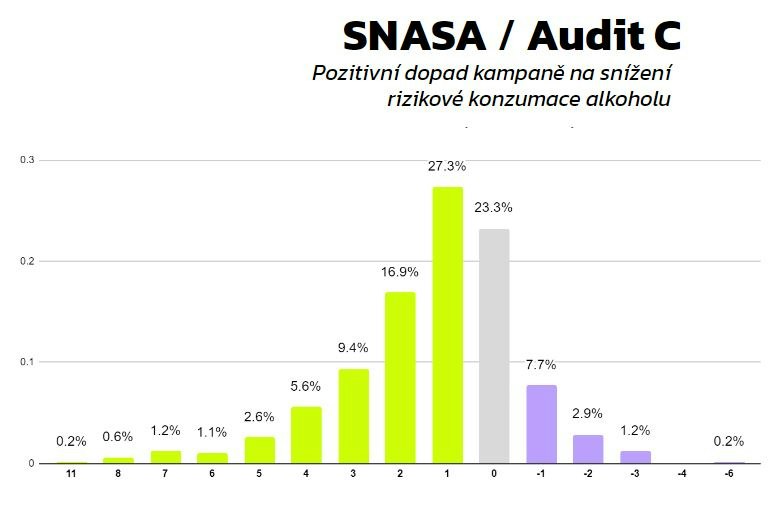
It is fairly well known that the Suchej únor (Dry February) campaign is a big success in the Czech Republic. Last year, 900,000 people signed up for the dry month. 81% of them consider the campaign positive. Among the benefits of a month without drinking, people mention a clear head, better sleep, more energy, faster weight loss or money saved. Even a year after the end of Dry February, 48% of registered participants report drinking more moderately. And there is much more.
What is perhaps less known is the fundraising side of the whole event. Can you share with us how Suchej únor is doing in this respect? How popular is Dry February with donors?
Honestly – it is not that glorious if we compare how many people do Dry February with how many actually register on our website. The numbers are not small at all, that is not it, but the biggest challenge is turning the general media awareness of the campaign into real conversions – registrations. So while in terms of the advertising value equivalent (AVE) of the media coverage we gained we are at around 550 million this year (the equivalent value of advertising or ad space), in terms of fundraising we are not even close to a hundredth of that amount. Apart from occasional financial help from partners, registrations are the only funding for the campaign and the nonprofit. That is what we try to tell people, along with the fact that if they know about the campaign, it did not happen by itself – there is a mountain of work behind it. Unfortunately, even the “state” does not quite see this, although we have an objective impact on reducing risky levels of drinking. It is also our biggest challenge – finding some kind of business model in a nonprofit, preventive awareness campaign for the general public.
What forms of online fundraising does Suchej únor use, and how do you use Darujme.cz?
Over the years we have built up a good contact base of our participants, as well as of institutional and media partners and influencers. That gives us a fairly stable starting position for communication. Every year we then top it up online with some ad spend. We have tried all sorts of things, but most of it goes the classic way into Meta, or into banner advertising. Darujme is then our key payment gateway for those who register. Whoever clicks on
and supports Suchej únor, z.ú. with a donation is registered for Dry February. And every year we have a completely different theme. This year it is
Nepít je umění (Not drinking is an art)
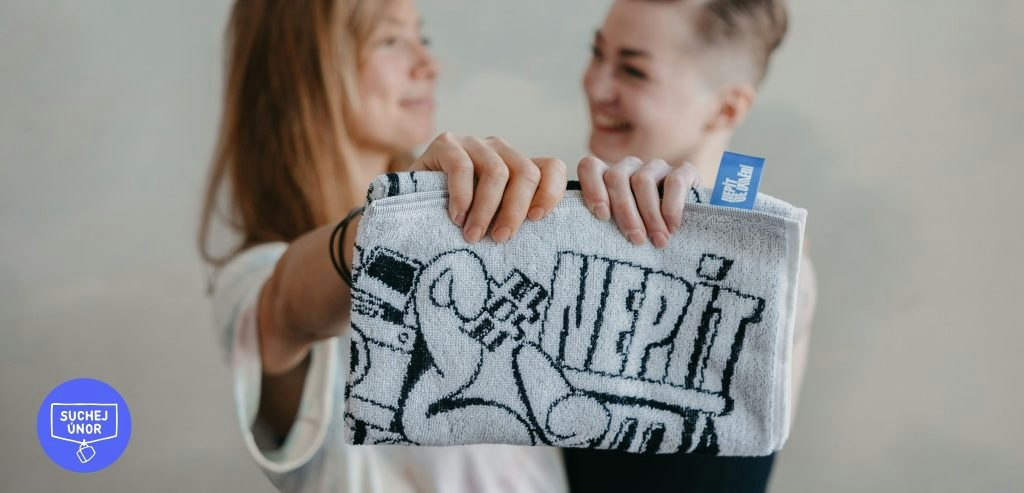
and the donors – our participants – receive from us, as a thank-you for their support, a beautiful, Czech-made
.
What was important for you when setting up your funding strategy?
The important thing was to see the campaign's potential first and foremost. We are responding to a real problem – in the Czech Republic there are over 1,000,000 people on the verge of risky drinking; put simply, these people do not know whether they have alcohol under control or whether alcohol controls them. It affects every 7th adult, and honestly, none of us has anyone in their circle who does not have an alcohol problem somewhere close to them. That is the visionary foundation of the campaign, the primary motivation. On top of that we had nothing but the bare faith that we would find the money. And to some extent we only managed that once we sat down and told ourselves we were going all in (2018/2019). Because for us it is still, unfortunately, just work after work – we have no stable funding secured in advance, no grants, and so in a way it is a tough business. High costs, pressure, work and faith that it will work out.
And how essential is the synergy between fundraising and your excellent PR?
This is the uneconomic part of the campaign and the price we pay for awareness-raising ?. If we cut everything back, made a few thousand pieces of merch and kept it “small”, the price/performance ratio would work much better economically. But the big costs go precisely into awareness-raising, building communication partnerships and so on. We cannot quite calculate the conversion “from article XY on the website of a region, a city or newspaper XY to a registration”. But we can see that the communication bubble is growing and catching more and more people. Not always paying customers, but if we are talking about impact, then it still makes sense, and, immodest as it may be, we are glad of every story of people, and whole families, who moved from risky drinking to moderate drinking.
Which PR channels or partnerships are key for you?
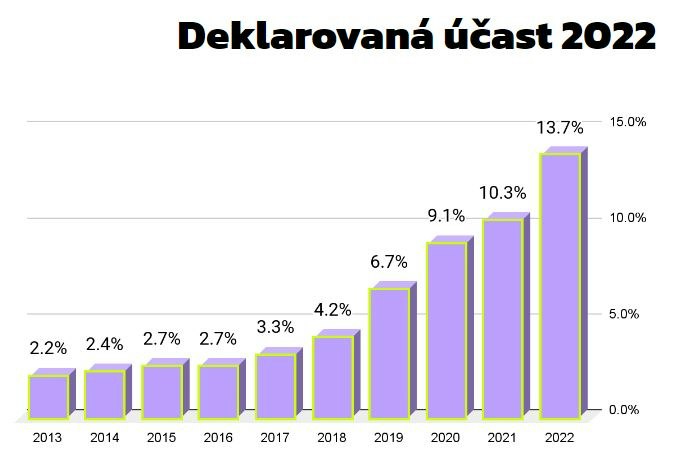
From a fundraising point of view, the largest percentage of conversions comes from our contact base, which keeps growing – partly thanks to the
we have on our website. From a PR point of view, we aim for a sort of integrated campaign (media, online, OOH, influencers, institutions, schools, etc.…), but we cannot calculate which channels are key. The decline in impact on social media is noticeable – the space is oversaturated; if 10,000 followers used to be a lot, today 100,000 is not enough. We are still not managing the already mentioned conversion of PR into fundraising. Perhaps also because we try to do professional work, and to a lot of people it looks like there must be a lot of money in it. There is rather a lot of work and passion from people working below their market rate. In terms of PR and impact, this year we very much appreciate the companies that got stuck in and let Dry February “into the house”. The long-standing stigma around drinking and the difficulty of admitting a problem is evident among employers. This year my colleague
took charge of companies, and there is a lot about Dry February on LinkedIn. That makes us very happy. Including new B2B partnerships and themed corporate workshops.
Is there anything else about the whole campaign that you think is important and that has not really been talked about yet?
An important piece of information about “alcohol” is that while the social costs (productivity, injuries, crime, accidents, etc.…) are estimated at CZK 56 billion, excise tax revenues are around CZK 14 billion. The costs far exceed the revenues, and that is not reflected in government transfers to prevention and so on. Not only Suchej únor pays the price for that, but also a number of other nonprofits working in various fields. It is a systemic issue, and there is still a lot of room for improvement so that these two glasses become a little more equal in volume.
Sign up for the month-long challenge at www.suchejunor.cz