Instagram, courage and a strong topic. How Sola pomáhá won hundreds of donors even without a big team
They managed to turn period poverty, a topic that is hard to communicate, into donor support for the first time last Christmas, when in their fundraising campaign, mentored as part of our accelerator Na vlně kampaně (Riding the Campaign Wave), they bet on the theme of dignity and raised more than CZK 200,000 from 180 donors. Thanks to Lucie Gregorová's experience with social media, they ran the whole campaign on Instagram and also got many Czech influencers on board. They repeated the success this spring, when they collected 11,000 signatures on a petition for introducing pads in schools, and 35% more donors contributed than in the previous campaign. We talked about Instagram, working with donors and what to rely on when you have neither a big team nor a big budget with Lucie Gregorová, co-founder of the organization Sola pomáhá, z. s.
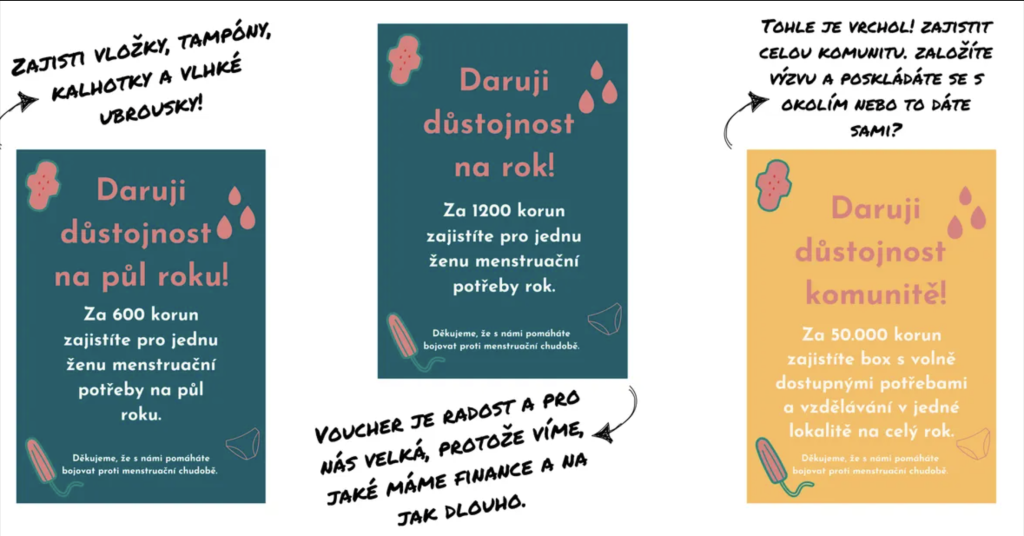
“Na Vánoce? Důstojnost!” (For Christmas? Dignity!): the first big campaign that opened the door to donors
Lucie, your year-end campaign on Darujme.cz was an inspiration to many – you pulled it off with two people and minimal resources. And on a very sensitive topic, too. You said that 40% of the Czech public doesn't want to talk about menstruation. What was the impulse to take on your first “full-fledged” campaign at all? Was it joining the fundraising accelerator, or had you already hit some capacity limits before?
We ran the “Na Vánoce? Důstojnost!” campaign mainly because we knew that if we wanted to keep doing what we do – delivering menstrual products to people in need across the country – we had to find a sustainable way to fund it. We knew we had a strong topic, strong stories and a good community. But until then, we had been doing fundraising more or less “on the side”. Joining the accelerator helped us give it a framework, a pace and the courage to ask for support out loud. It inspired us to believe that we could manage it and that it was time to give it that framework.
We also had a great mentor: Stanka Fabšíková, who was supportive but strict. You could say it took us a while to find our way to each other, which made our collaboration and rapport all the better afterwards. She is still a very important person for us and her support means a lot to us. It may not seem like it, but we lack confidence in a lot of things. Maybe precisely because we so often experience rejection and indifference. We will probably never have the same impact as children or animals, but I think we are doing very well.
For your first campaign, “Na Vánoce? Důstojnost”, you decided on a mix of three communication channels. Why did you choose Instagram, mailing and one physical location?
It was a fairly straightforward calculation of what we could handle. Instagram had been our main channel from the start. We have a community there, we feel at home there and we know how to talk there. We wanted to kick-start mailing and get it going, because I think it is very important for marketing communication and it was a very untapped potential for us, and we wanted to make use of the support within the accelerator and try something new at a moment when someone could teach us. And we added the physical space because it offered itself. It was a café where Anička worked, people were used to going there, and it was practical to have somewhere physical to point to as well.
When the Instagram bubble isn't enough: the petition for pads in schools as a street campaign
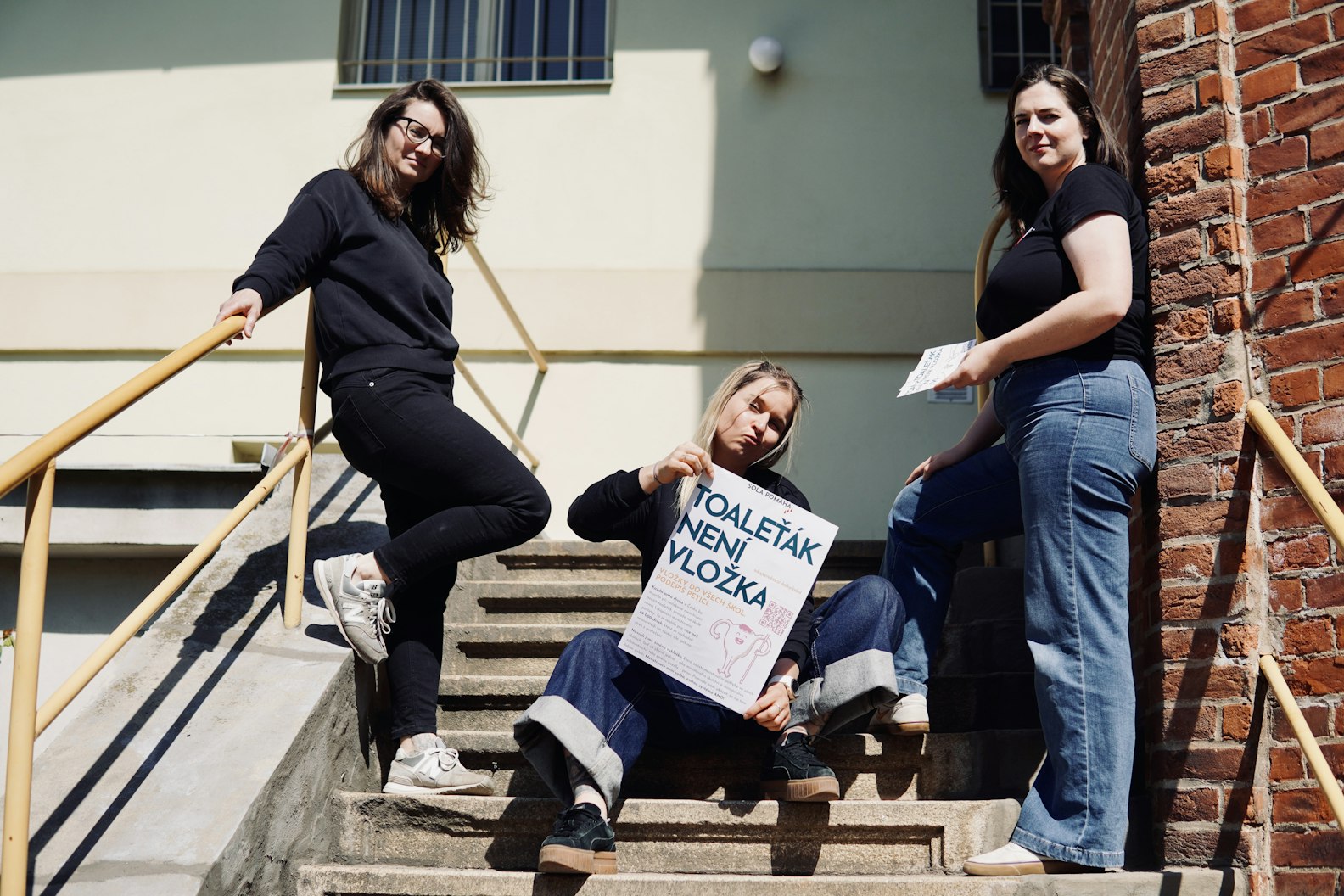
Are you continuing with this model? I'm mainly interested in whether Instagram has proven to be a good source of contacts for further work with donors. In the spring, you collected 10,000 signatures for introducing pads in schools with “Toaleťák není vložka” (Toilet paper is not a pad), got the media talking about the topic and cleared the way for a new decree. Big congratulations! How do you plan to keep communicating with the people from the petition?
Thank you! Instagram has proven itself for us in the long run, but for the Toaleťák není vložka campaign we chose a completely different approach. This time we deliberately did not bet on Instagram as the main channel. We knew that if we wanted to break out of our bubble and run a real awareness campaign that would also reach people who had never heard of Sola, we had to go outside. Literally.
So the main focus of the campaign was outdoor, physical presence and involving the so-called rightsholders, i.e. those directly affected by the topic. In this case: students. We teamed up with the great student initiatives LunaLone and AcceCycle. We had thousands of posters and stickers printed and involved a network of volunteers across the regions. At first it was mainly our friends, but then it snowballed. People could also download the materials from our website and spread them themselves.
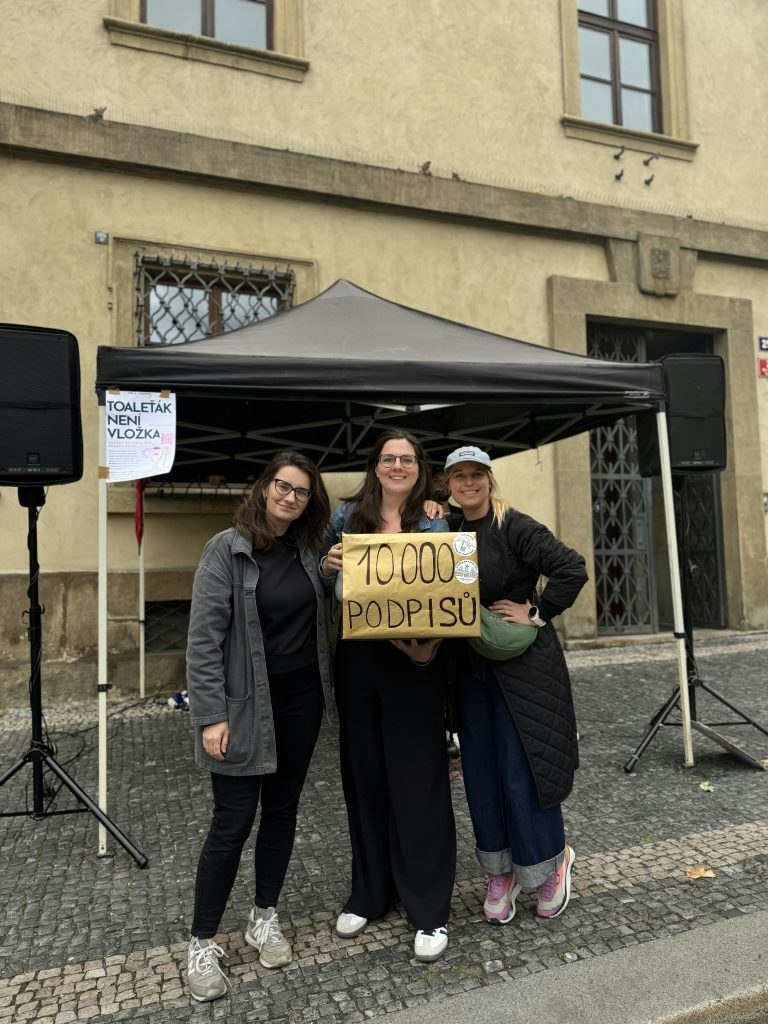
In the first 14 days we focused primarily on distributing the posters and stickers, and it took off incredibly. Our visuals were everywhere. In cafés (a huge thank-you goes to Anička's husband Ondra, who put his network of contacts into it), in schools, in libraries, at bus stops. Over 3,000 signatures came in. Only then did we add petition stands and Instagram – that was the moment it really got its spin. People were talking about the campaign and about Sola, there were dozens of mentions in the media, and we saw huge numbers on social media.
It was a great move. Very laborious, but absolutely meaningful. We needed to be heard. And also to say clearly: this is our topic and our work. We were absolutely thrilled by how many people joined in and made the campaign their own – that was what we wanted, for it to be everyone's campaign, not just ours. A big thank-you also goes to the students, who put enormous energy into it and made the campaign their own.
At the same time, it gave us a hugely valuable database of people with whom the topic resonates. We want to keep building a relationship with them.
Do most of your donations come directly through Instagram, or do you see higher conversion in e-mails, as most nonprofits do?
This is our Achilles' heel. We don't have a good conversion from mailing at all. And certainly not for donations. And that despite following all the rules and having the great Adla, who is excellent at mailing. We have great readership and open rates, but as soon as it comes to a donation, it's dismal. So definitely more Instagram, and most of all probably organic traffic through the website and search. But we figure that this is heavily influenced by the fact that a large part of our database is students and pupils, who don't exactly have money to spare.
How to come across on social media? Authenticity and a clear style instead of “nonprofit speak”
Instagram is the main vehicle of the campaign. It seems that here you know how to say exactly what you need to. You know how to get influencers involved. You have recognizable graphics, funny videos, and you speak to people clearly, briskly and in a distinctive tone. What do you think works best on Instagram for small nonprofit organizations?
I think the absolute basis is knowing how you want your organization to come across. To me, that's the key: being authentic, keeping a clear tone and visual consistency. People have to understand you. You have to speak their language, not hide behind “nonprofit speak” or generic phrases.
You don't have to be a social media specialist right away, but it's good to get some advice at the start, or find some inspiration and stick with it for a while. It's an investment that pays off. The online space is saturated, and unfortunately I often see that the communication of smaller nonprofits isn't “on brand” enough. There is no clear online persona, no recognizable style. And yet they do great work, they just end up missing out on the attention they deserve.
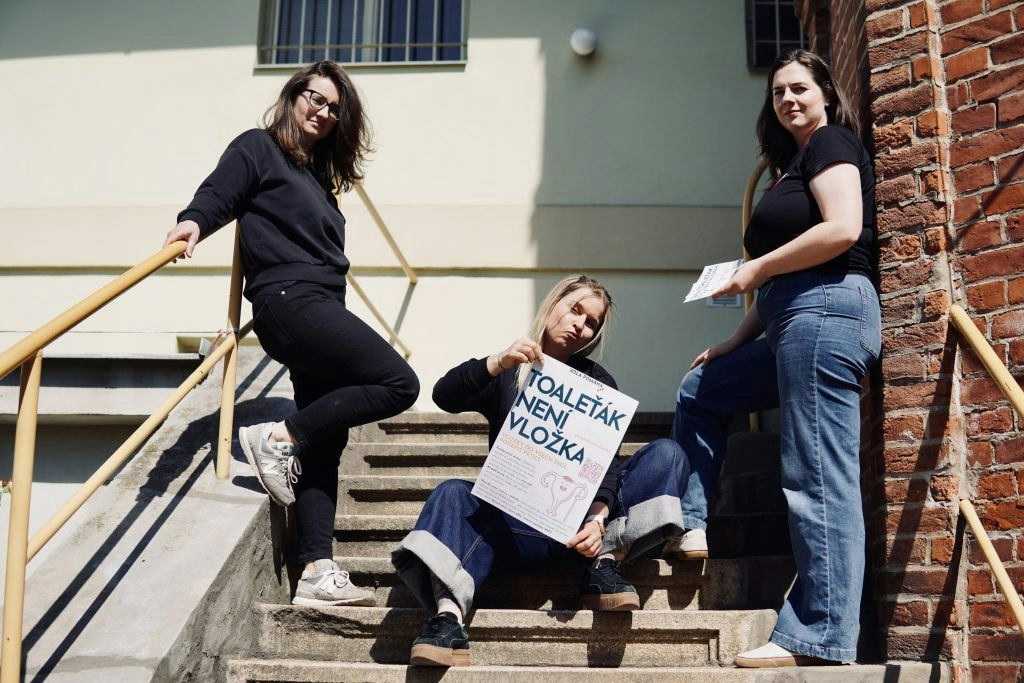
From the start, we knew Sola should be a cheeky, smart friend. The kind you want to identify with, want to have in your feed, want to share content from. And when something from her lands on your feed, you know right away that it's Sola. It also needs to be said that we have the big advantage that nobody meddles with it, no rules tie us down.
You work a lot with influencers in your campaigns. How do you manage to reach them, and what would you advise others who are considering something similar?
We have the advantage that they take up our topic as their own. We build our collaboration with influencers on a relationship and primarily try to approach those for whom it makes sense, and give them room to talk about the topic in their own way. And what would I advise? Don't look for the “big fish”, but rather for those who would talk about the topic even if you didn't write to them. And above all: don't be afraid to ask.
“Fundraising changed the way we think about campaigns”
At the webinar where you shared your experience with other nonprofits, you mentioned that fundraising “opened your eyes” when it comes to further development. What did this experience give you as an organization? How did it change your approach to further campaigns?
Fundraising opened our eyes in that, for the first time, we sat down and started planning ahead. We learned to be more structured, we started evaluating more, going back to what worked and what didn't. But it has to be said that we know how to run campaigns, but we don't really know how to monetize them well. We haven't yet managed to build strong relationships with major donors or big corporate partners. We are authentic and we may understand our topic and communication, but we are not saleswomen. And we are increasingly toying with the idea that we will have to admit that someone else is needed for that.
You also mentioned that working on the first campaign was, despite its success, very exhausting for you personally. Was the second campaign easier for you? And do you perhaps watch your limits more now?
The second campaign was different in one fundamental way: our time was paid for, so we didn't have to do it alongside our regular work and stress about how we would pay the rent; we had financial support from the NF Kladné nuly endowment fund and could simply devote ourselves to nothing but the campaign for 6 weeks, which is a very fundamental difference. It may be a mundane fact, but people in the nonprofit sector simply need to be paid well in order to do good things. The second fundamental change was that we planned a lot, had everything ready a month in advance and involved a larger number of people to whom we handed over certain tasks.
What would you advise other small teams that want to launch their own campaign but worry that they lack the capacity, experience or budget?
I won't build any castles in the air here. If you want to make a good campaign, in my opinion you need to have one of these three things: a strong topic, strong know-how or a strong budget. Building a campaign just because we want a campaign and it would seem nice is not possible. Even a simple campaign costs something, whether it's time, energy or expertise. If you have one of those, go ahead and start. You don't need a perfect video or a complex strategy. Far more important are a clear idea, honesty and a topic that resonates. Do your research, look at successful campaigns, look at ads you like, follow influencers who resonate with you. Watch the commercial market, get inspired, keep track of what troubles people and what they respond to.
As a small team, you have an advantage: you are close to the topic, you can speak from the heart, you know specific stories, you know why you do it. And people can tell. Things don't have to be big to be strong. It's enough if they are believable. And once you do run a campaign, dedicate someone to it, one hundred percent, so that they can focus on nothing but the campaign. Because otherwise it always ends up half-baked.
Editor's note:
Lucie Gregorová plays with the generic masculine and with gendered verb forms (in the Czech original) quite consciously and deliberately.